
The Hidden Danger of Familiar Risks in the Workplace
The greatest risks in the workplace are often not the hazards we don’t know about. They’re the ones we’ve become so familiar with that we no longer see them.
Safety professionals spend their careers identifying risks. Inspecting fire extinguishers, eyewash station checks, certifying forklift operators, and so much more. While these activities matter greatly, they are predictable and scheduled.
The greater challenge is recognizing the risks that have become part of the everyday routine.
Going Beyond “Check-the-Box” Safety
Safety programs rely on inspections, documentation, training and established procedures to help protect employees and maintain compliance. However, completing required safety activities does not mean every risk has been identified.
Organizations can unintentionally develop a “check-the-box” approach to safety, where completing the required task becomes the primary objective. Inspections are completed, training is documented and procedures are followed, but hazards that fall outside those established processes remain.
Effective safety programs require more than completing scheduled activities. They require continued evaluation of the conditions employees encounter every day.
Compliance vs. Awareness
Compliance establishes important workplace safety requirements and expectations. Awareness adds another layer by encouraging organizations to continually evaluate their environments for changing or overlooked risks. The distinction is important.
A condition can become accepted simply because it has existed for an extended period without an incident. An unsafe behavior can become normalized when it is repeated without consequence or correction.
Experience can also contribute to this normalization. An unsafe shortcut taken by an experienced employee may receive less attention than the same behavior from a new employee, despite presenting the same potential risk.
Safety standards should remain consistent regardless of familiarity, experience, or how long a condition has existed.
The Risks We Walk Past
Routine exposure can change how people perceive hazards. It could be:
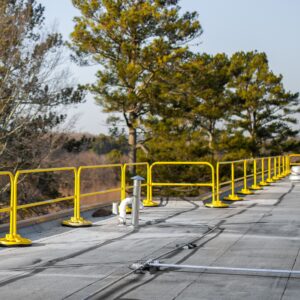
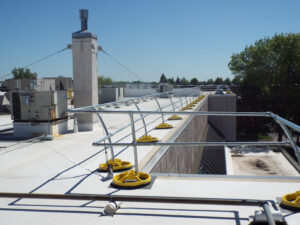
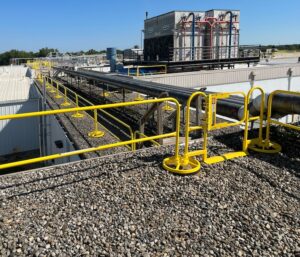
Rooftop equipment located near and unprotected roof edge
Unprotected roof hatches
Open loading docks
Unguarded equipment
Elevated work areas with no fall protection
Stepping over pipelines and other hazards
A shortcut may begin as a one-time exception. When the behavior is repeated without consequences, it can gradually become part of the normal process. Eventually, employees may stop recognizing it as a deviation from the established safety standard.
This makes familiarity an important consideration for safety professionals, supervisors, and organizational leaders.
Evaluating Familiar Environments with Fresh Eyes
Identifying normalized hazards requires intentionally evaluating familiar environments from a new perspective.
During workplace inspections and safety assessments, consider these questions:
If this condition appeared today, would it be considered acceptable?
Would a new employee be permitted to perform the task this way?
Would the organization be comfortable with the condition following an incident?
Is the actual level of risk being evaluated, or has familiarity influenced how the condition is perceived?
These questions can help shift the focus from simply confirming compliance to identifying conditions and behaviors that may have become normalized.
This approach can be especially important when evaluating fall hazards.
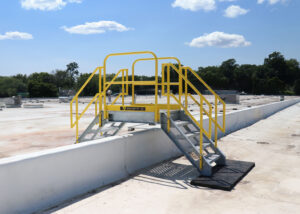
Roof edges, roof hatches, loading docks, mezzanines and other elevated work areas may remain unchanged for years. Regular exposure to these areas does not reduce the potential consequences of a fall.
Great Safety Professionals Challenge Familiarity
Strong safety cultures depend on more than policies and procedures. They require consistent attention to the conditions and behaviors that an organization is willing to accept.
Effective safety professionals recognize that familiarity can affect anyone, regardless of experience.
Rather than assuming a condition is safe because it has existed without an incident, they continue to evaluate the risk. They identify shortcuts before those shortcuts become standard practice, question conditions that have become accepted, and look at familiar environments from a fresh perspective.
Each time an unsafe condition is identified and addressed, the expected safety standard is reinforced.
Turning Awareness Into Action
For organizations managing busy facilities, multiple locations, or risks both inside the facility and on the rooftop, finding the time and resources to assess and address every hazard can be a challenge. SRC can help provide the fresh perspective those environments need while managing the entire process from start to finish.
From hazard assessment and engineering to manufacturing and installation, SRC serves as a single turn-key partner throughout the project. After installation, yearly safety checks help ensure systems continue to perform as intended. By taking a comprehensive approach to fall protection, SRC helps organizations address the risks that may have become familiar without adding another complex project for their teams to manage.
Start your hazard assessment