Tyson and SRC teamed up to create a massive, streamlined safety initiative—one that was ambitious, efficient, and executed on a jaw-dropping scale.
In 2021, Tyson Foods, the nation’s largest producer of poultry products, took a hard look at their vast portfolio of facilities and determined they were exposed to an unacceptable level of risk.
Across 140 facilities nationwide, their rooftops played host to a diverse and unruly collection of HVAC systems, air makeup units, ammonia lines, and cooling systems. The safety team at Tyson knew they had been fortunate, but needed to assess and mitigate the pervasive levels of risk on their rooftops. That’s when Safety Rail Company (SRC) got the call.
This case study dives into how Tyson and SRC teamed up to create a massive, streamlined safety initiative—one that was ambitious, efficient, and executed on a jaw-dropping scale.
Tyson Foods has long prided itself on rigorous safety policies inside its plants, but when it came to rooftop safety, they admittedly had been less stringent. Their facilities, ranging from hatcheries and feed mills to slaughterhouses and cook plants, each had its own rooftop quirks. Some had easy access, others looked like obstacle courses, and thanks to the nature of meat processing, many were coated with a slick layer of fat and grease—hardly ideal for maintaining balance.
It didn’t take long for Tyson to realize they needed a single safety partner who could handle it all.
Initially, Tyson tackled the issue with a patchwork strategy, hiring different regional safety companies to handle the problem site by site. The result? A mess of inconsistent solutions, half-finished projects, and a lack of uniform safety standards. It didn’t take long for Tyson to realize they needed a single safety partner who could handle it all.
As is so often the case, there were people in the Tyson organization who thought active fall protection systems would be the quickest and easiest way to solve the problem.
“We hear it all the time,” says Craig Erickson SRC President. “Clients think the fastest and easiest solution is to put up some anchor points and hand out some harnesses. Easy. Right?”
It didn’t take long for the SRC team to determine that this was not going to be an effective solution. With Tyson there were many challenges that made active protection a less-than-ideal approach. “The size of the facilities and the sheer number of obstacles on their rooftops would have demanded so many anchor points and so many different lines, they’d present their own level of risk. Plus, there was also a very real concern that so many instances of penetration in the roofing membranes would increase the risk of leaks and potential contamination into the meat processing facility. Ultimately, an entirely active protection strategy just didn’t make sense,” added Erickson.
With expertise in hazard assessment, engineering, manufacturing, project management, and installation, SRC was ready to take the wheel. The project unfolded in three key phases:
Phase 1 : Hazard Assessment and Policy Development
SRC kicked things off with a deep dive into the hazards lurking on Tyson’s rooftops—something that had never been done at this scale. The result? A standardized, OSHA-compliant rooftop safety policy that ensured every single facility would follow the same rigorous standards.
Phase 2 : Defining the Safety Solution
At first, Tyson considered active fall protection solutions like harnesses and anchor points. But with rooftops this complex, that would have been a logistical nightmare—imagine the hassle of endless rooftop penetrations, potential leaks, and warranty issues. Not ideal. Instead, Tyson and SRC opted for passive fall protection, which provided a long-term, maintenance-free solution. The final plan included:
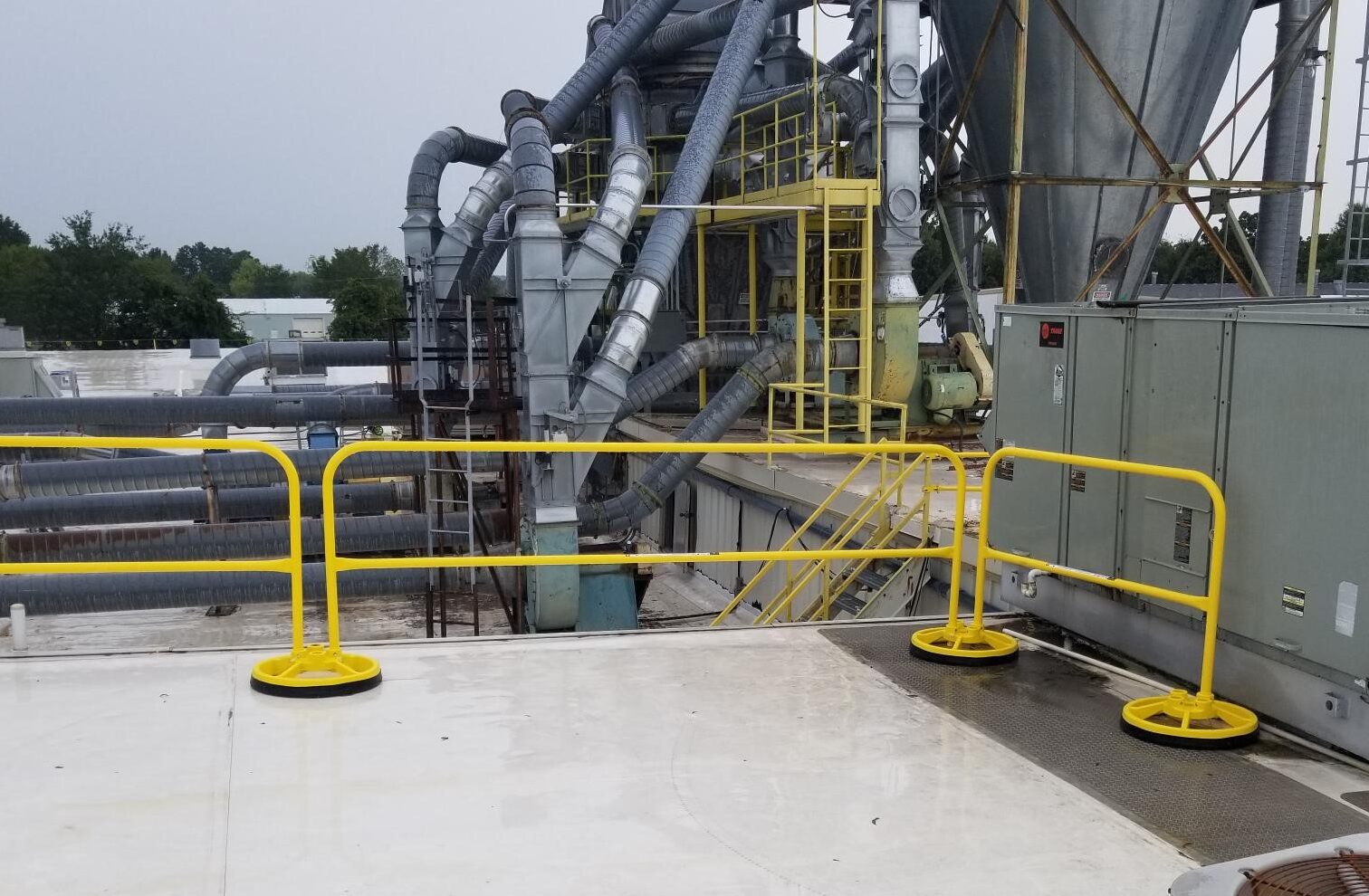
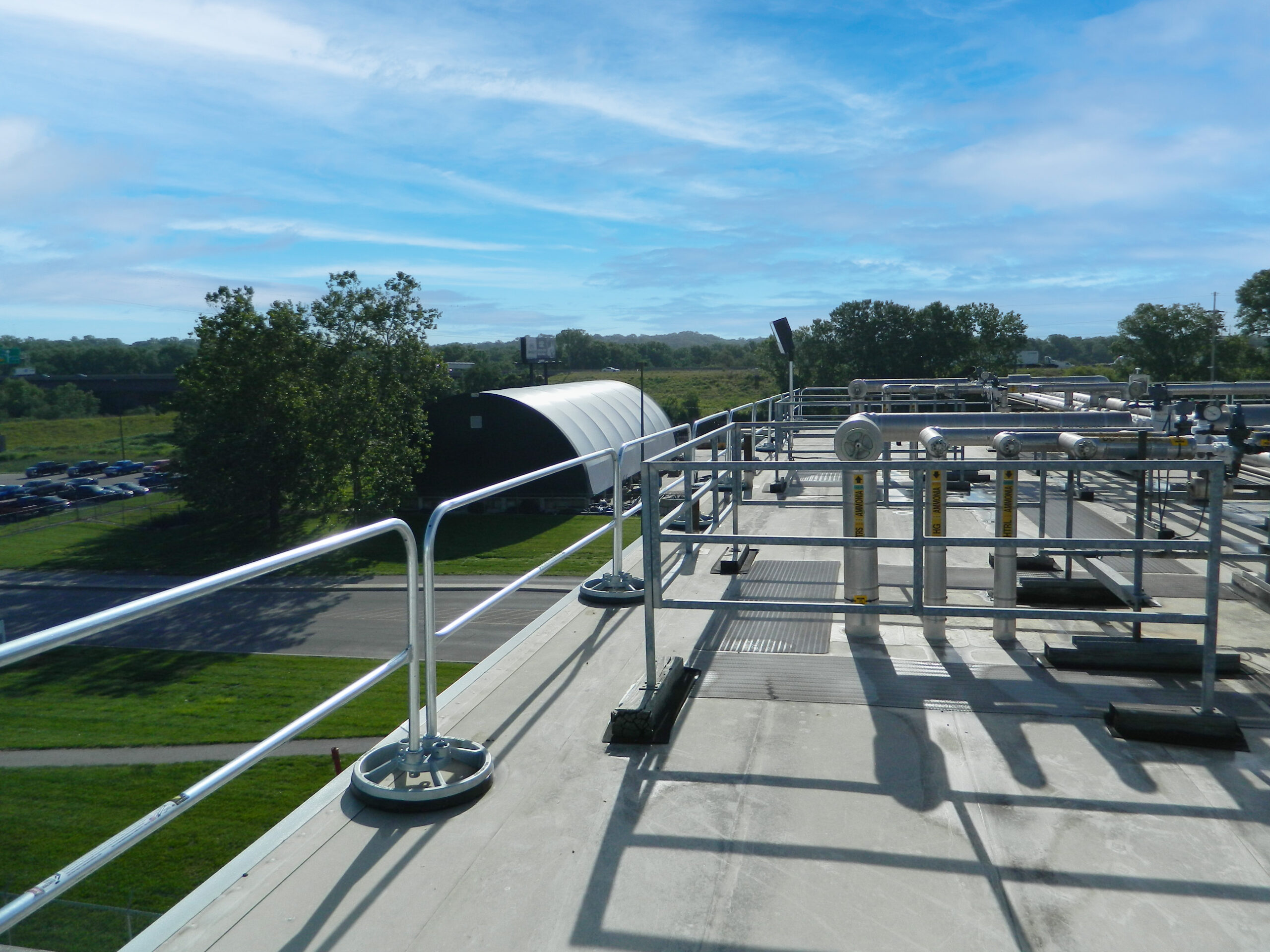
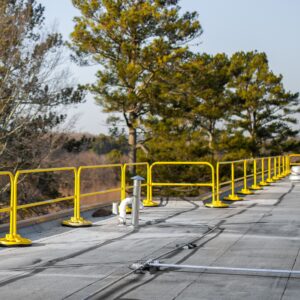
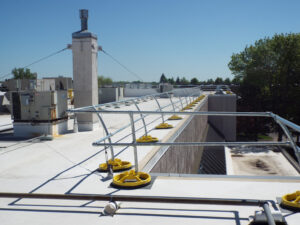
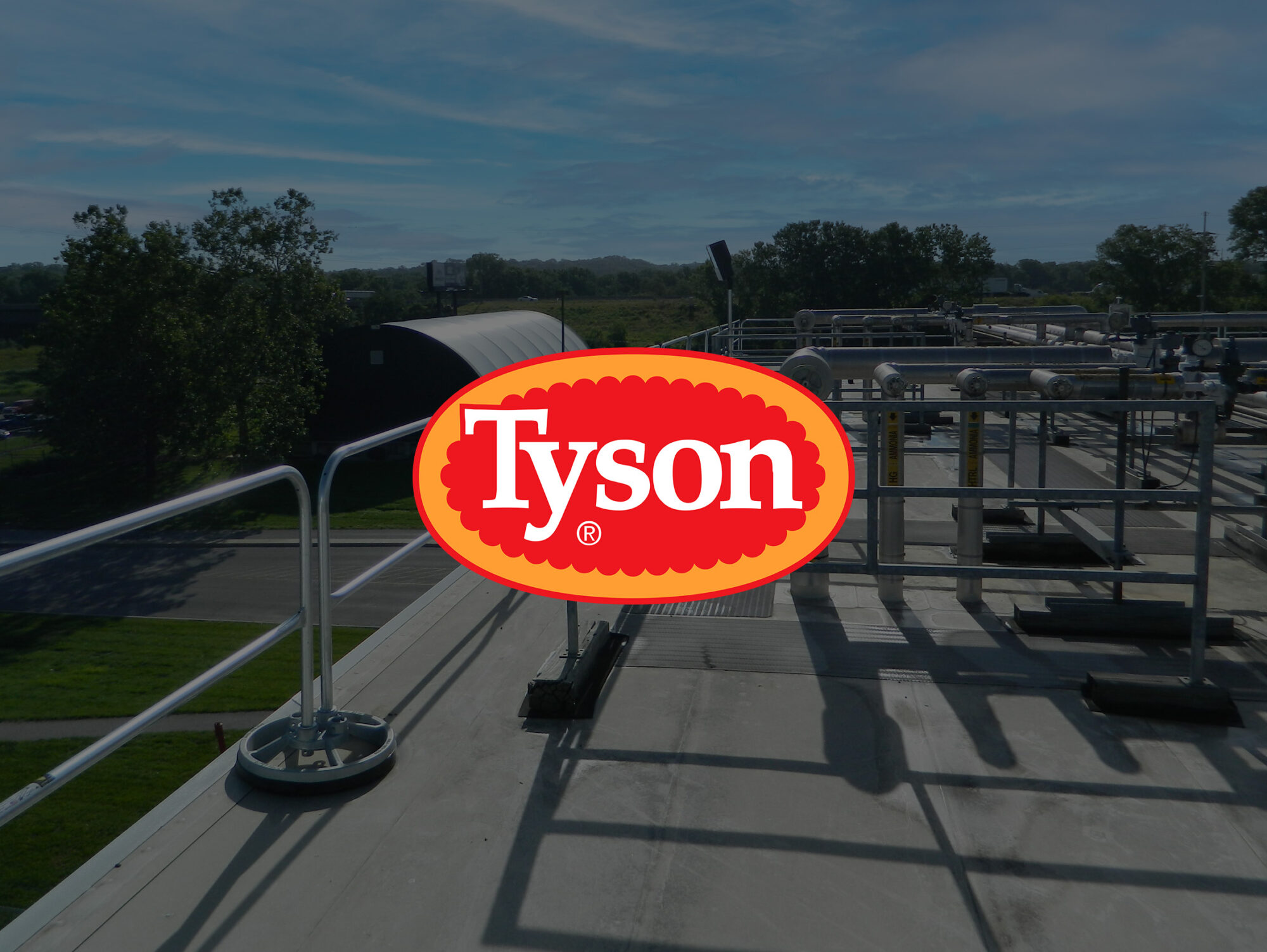
Perimeter Guardrails: SRC 360 Mobile Rail. Non-penetrating and infinitely reconfigurable, SRC 360 was the perfect foundational product.
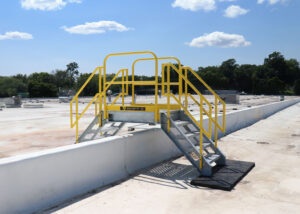
Access Point Safety: Self-closing gates at ladder access points and hatch guard systems to keep entry and exit points secure.
Visual Warning Systems: Clearly marked no-go zones to keep workers from wandering where they shouldn’t.
Skylight Protection: Skylight screens that turned potential fall hazards into non-issues.
With this new policy in place, all new Tyson facilities and acquisitions would automatically integrate these safety measures, ensuring a company-wide standard and OSHA compliance.
Phase 3: Execution and Installation
SRC got to work, deploying multiple installation teams across the country to execute the rollout at top speed. On average, each facility was transformed in just five days, with installations carefully scheduled to keep Tyson’s operations running smoothly. Key execution highlights included:
Supply Chain Efficiency: With in-house manufacturing, SRC avoided supply chain bottlenecks and kept materials flowing.
Project Management Precision: A dedicated SRC team kept communication tight with Tyson’s corporate and regional safety teams, ensuring a seamless rollout.
On-Budget Completion: Despite the project’s massive scale, SRC delivered it on budget—no last-minute surprises, no hidden costs.
Zero Safety Incidents: A project this size with zero safety incidents? That’s how you know you’re working with pros.
SRC’s holistic approach—covering everything from hazard assessment to installation—showed that a centralized safety initiative isn’t just practical, it’s transformative.
Results and Impact
The impact of this project went far beyond just ticking off a safety checklist:
Enhanced Employee Safety: Rooftop workers now operate in a significantly safer environment, drastically reducing fall risks and, in many cases, improved efficiency.
Enterprise-Wide Compliance: A single, standardized policy means every Tyson facility—new or existing—follows the same high safety standards.
Industry Leadership: Tyson’s initiative has been recognized at poultry industry events, cementing its position as a workplace safety leader.
Efficiency and Cost Savings: Passive fall protection eliminated the need for frequent training and inspections required for active systems.
Ongoing Safety Improvements: Tyson and SRC continue collaborating on Phase 2, fine-tuning solutions for site-specific challenges like elevation changes and access crossover systems.
Tyson Foods and Safety Rail Company’s partnership is proof that large-scale safety solutions don’t have to be complicated—they just have to be smart. By ditching the fragmented, plant-by-plant approach in favor of an enterprise-wide strategy, Tyson achieved uniform safety compliance, reduced operational risks, and made their rooftops a whole lot safer.
SRC’s holistic approach—covering everything from hazard assessment to installation—showed that a centralized safety initiative isn’t just practical, it’s transformative. And as Tyson continues to grow, their commitment to rooftop safety isn’t just a passing phase—it’s a long-term priority, with SRC as their trusted safety partner ensuring compliance and risk mitigation every step of the way.
This case study stands as a testament to how proactive safety initiatives, executed at scale with the right partner, can redefine industry standards and drive long-term operational benefits.