

Modular Stair System: A Safer path from A to B.
Products Used
If you spend any amount of time in manufacturing facilities, logistic centers or just about any commercial rooftop, you’ll encounter all kinds of obstacles. Each of those environments can potentially serve up a maze of supply lines, pipes, equipment, power cables, parapets and sudden changes in elevation. Creating a safe and efficient work path through those types of environments often requires a modular stair system.
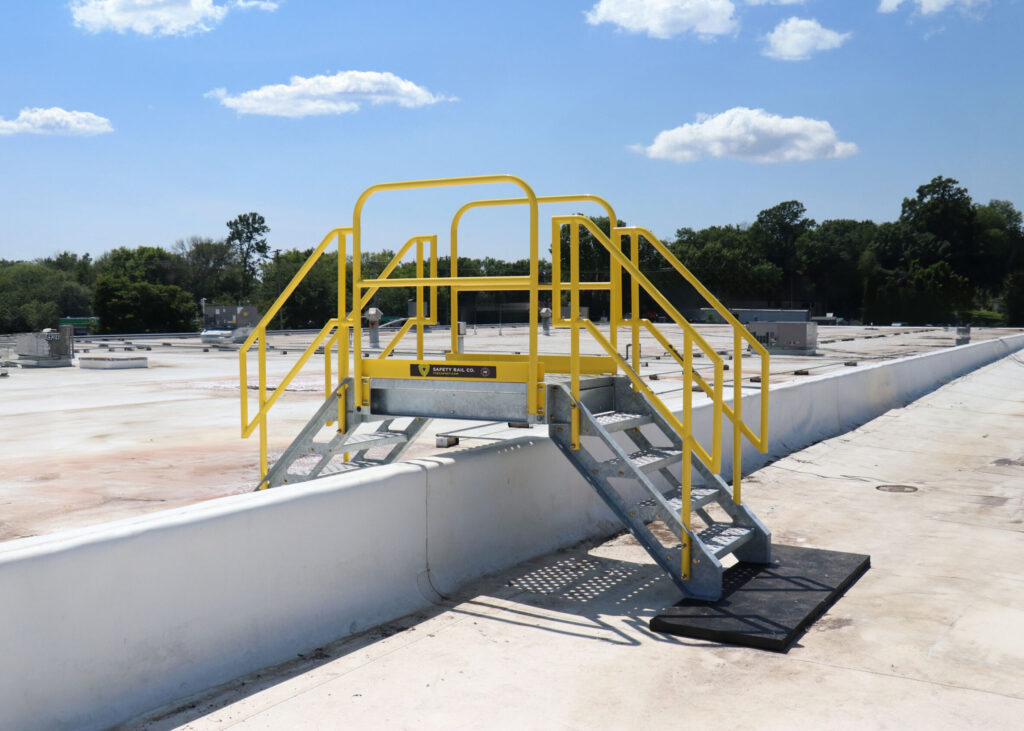
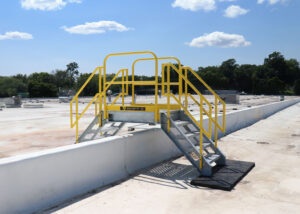
Made up of specialized components of platforms, ladders and stairs, modular stair systems create safe passage over obstacles and barriers. They provide a designated pathway so workers can move around machinery and across shop floors and rooftops without detours or shortcuts. The result? Safer workflows, fewer slips and falls, and less downtime.
Why Modular Stair Systems Matter
Unlike traditional ladders or makeshift access points, an OSHA-compliant modular stair system is engineered for safety. They don’t just provide a way up and over, they reduce liability, improve efficiency and protect personnel. When selecting a system, here are a few key features to look for:
Compliance with Standards:
Choose products that meet OSHA (Occupational Safety and Health Administration) and ANSI (American National Standards Institute) requirements. Compliance ensures your system is designed to meet strict safety guidelines and can help protect your organization from costly liability.
Sturdy Construction:
High-quality aluminum or hot-dip galvanized, powder-coated steel, ensure that your system will stand up to years of exposure and heavy use.
Non-Slip Surfaces:
Steps and platforms should include non-slip treads for secure footing in wet, icy or oily conditions.
Handrails:
Strong handrails on both sides provide essential stability as workers climb.
Safety Gates:
Many modular stair systems include integrated safety gates that automatically close, preventing unauthorized access and reducing accidents.
Adjustable Heights:
Look for options with adjustable legs or heights. That flexibility allows the system to adapt to different rooftop levels, piping or equipment layouts.
Stability Features:
Anti-tip bases and leveling feet keep the structure steady and secure, even on uneven surfaces.
Easy Installation and Portability:
A good modular platform should be quick to install and easy to relocate as facility layouts change. Portable models are especially useful in dynamic environments like warehouses and production lines.
Load Capacity:
Always confirm the system can handle both the worker and the tools or materials they carry.
Where Modular Stair Systems Are Used
- Manufacturing and Industrial Facilities: Over conveyors, piping, or production equipment.
- Construction Sites: For safe access over conduits, trenches, or temporary obstructions.
- Power and Energy Sector: In plants and substations, where safe access to electrical panels is critical.
- Oil and Gas: In refineries, drilling rigs and offshore platforms, modular ladder systems are critical, providing safe passage over piping, equipment or walkways.
- Transportation and Logistics: Airports, railyards, and distribution centers all rely on modular stairs and platforms.
- Food and Pharma: Hygienic facilities use modular stair systems to maintain compliance while enabling access to elevated areas.
A Safer, Smarter Solution
At the end of the day, a modular stair system is about risk reduction. They make it easier for employees to do their jobs safely, efficiently and with confidence. But like any investment in workplace safety, their effectiveness depends on proper training and adoption. Encourage teams to use designated access routes and train them on the correct use of ladders and platforms.
When safety, compliance and efficiency matter, modular stair systems literally put workers on the right path.